
August 30th, 2009 by
Editor
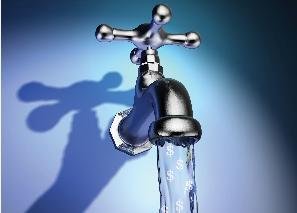
For almost a century, the United States has been collecting and processing
data about the state of the nation’s surface water. Lakes, rivers, streams,
and ponds are observed, measured and sampled to check for water quality,
contamination and water levels. From this data, a fairly robust picture of the
nation’s surface water can be had. Satellite imagery has made this task more
efficient enabling seasonal changes in water levels to be observed on a grand
scale. Without diminishing the value of these efforts, one critical area of water
monitoring has been left behind.
Read More
Popularity: 70% [?]
Posted in Water Articles |
Comment on this article »
February 1st, 2009 by
Editor
Global Climate Change Part I - An introduction
As the Earth’s climate changes, new stresses will be placed on the planet’s
resources and those who are tasked with managing them. The available data
indicates that the global climate has warmed by approximately 0.74 °C (1.3 °F)
over the past hundred years, from 1906-2005 . Furthermore, many scientists
predict that the Earth’s average temperature could rise an additional
1.4 °C (2.5 °F) or more in the coming century. A great deal of attention has
been paid to what contributing role human activities may be playing in this
temperature rise; greenhouse gases, most specifically carbon dioxide (CO2),
produced as fossil fuels such as oil and coal are burned are cited as the major
drivers behind this temperature rise. In an effort to counter the trend, nations
began to propose reductions in greenhouse gases; at the Kyoto conference of
1992, specific greenhouse gas reduction targets were set for many
industrialized nations aimed at an overall reduction of 5.2% by 2010. The
Copenhagen conference, planned for 2009, is expected to push these target
reductions even further.
Read On…
Popularity: 70% [?]
Posted in Water Articles |
Comment on this article »
December 31st, 2008 by
Editor
Imagine that you were on the adventure of a lifetime, exploring outer space
and – literally – going where no one has gone before. Oh, and there’s just one
catch; you’ll need to recycle your own urine into drinking water. That’s now
reality for the astronauts aboard the International Space Station. In November,
the space shuttle Endeavor delivered NASA’s Water Recovery System (WRS) and
after a few initial glitches, it appears to be functioning well.
More
Popularity: 77% [?]
Posted in Water Articles |
Comment on this article »
November 6th, 2008 by
Editor
One way that we can make our existing water supply work more effectively
for our society is conservation. Through efficient use of fresh water supplies,
it is possible to stretch our existing resources further and preserve them for the
future. While there are many novel concepts and technologies that could make
a substantial impact toward conserving our water a challenge has been sharing
that information with the broader community of regulators, planners, contractors,
and appliance makers so that national policies might be developed. All of these
groups have a direct influence in implementing water conservation technologies
but lack of a common forum appeared to impede progress historically. In a proactive
move to change that trend, in 2006, the US EPA announced the formation of the
Alliance for Water Efficiency (AWE). AWE’s primary mission is to serve as an
advocate for water efficiency research, evaluation, and education by bringing
local, state and federal regulators together with utilities and industry
representatives to the same table.
Read on…..
Popularity: 64% [?]
Posted in Water Articles, News |
Comment on this article »
October 4th, 2008 by
Editor
When people talk about the major issues impeding progress in bringing clean
water and sanitation to the developing world, themes like “limited resources,”
“lack of infrastructure,” and “war” are common. All are certainly very real barriers,
yet one issue that stands in the way of millions having access to water rarely gets
attention: corruption.
Read on..
Popularity: 51% [?]
Posted in Water Articles |
Comment on this article »
September 21st, 2008 by
Editor
Most people have heard of acid rain, widely discussed as a threat to forests
downwind from coal-fired power plants. Acid rain is primarily caused by
sulfur dioxide (SO2), a byproduct of burning coal, oil or gas that is tinged with
sulfur. Because sulfur is a commonly occurring element, it is virtually impossible
to find deposits of these fossil fuels that do not contain sulfur. When sulfur dioxide
is emitted as these fuels are burned, it enters the atmosphere and reacts with
water. The outcome of this reaction is sulfuric acid (H2SO4); it is this acid that
gives the rain its name.
Continued
Popularity: 50% [?]
Posted in Water Articles, News |
Comment on this article »
August 30th, 2008 by
Editor
In the months and weeks leading up to the 2008 Olympic Games in Beijing, there
was considerable concern about the pollution in and around the Olympic venues
and its potential impact on the Games. Media coverage tended to focus on the
worst case scenarios of ‘what might happen’ but little coverage was aimed at what actions the Chinese initiated to mitigate health risks to athletes and spectators.
This article will shed some light on those actions and the results that followed. Continued……
Popularity: 30% [?]
Posted in Water Articles |
Comment on this article »